Battery Room Ventilation and Exhaust Systems
- Discover Additional Solutions:
- VS-12-110VAC
- VS-12-LINF-110VAC
- VS-12-24VDC
- VS-12-48VDC
- VS-24
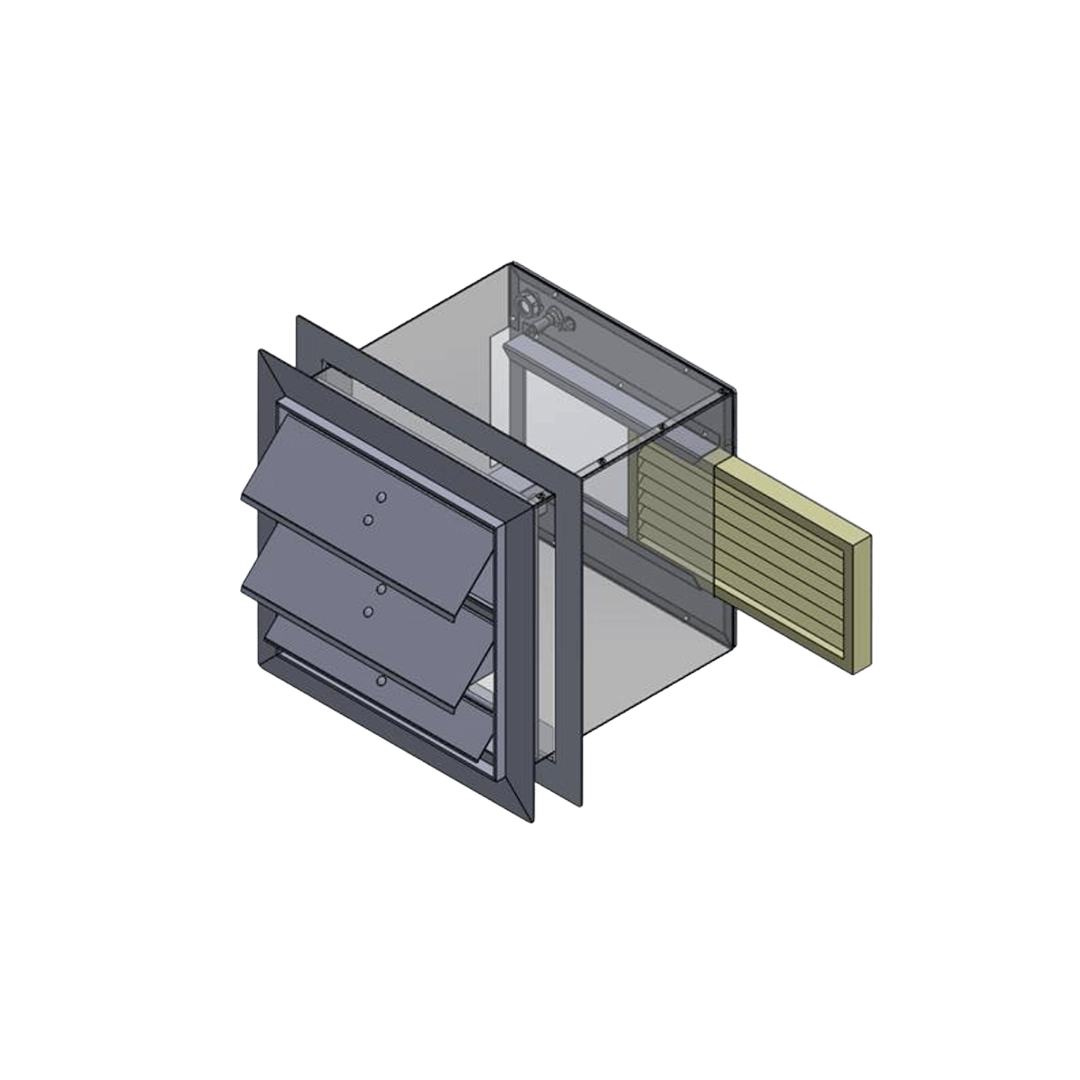
The VS-12-LINF-110VAC is the intake-only variant of the VS-12 platform—a motorized, louvered wall inlet with an integrated MERV-13 filter. It’s designed for battery rooms and other spaces where hydrogen monitoring is required. This model does not include a fan; it opens on command to admit make-up air and stays sealed/filtered the rest of the time to keep out dust, debris, and pests.
Typical Applications
- Battery rooms (VLA/VRLA/Li-ion)
- UPS plants, telecom/DC power rooms
- Energy storage enclosures
- Industrial spaces requiring monitored, intermittent ventilation.
How it works (control-on-demand)
A hydrogen gas detector (Eagle Eye HGD-Series or any detector with a dry-contact relay) is typically set to open the louvers at 1% H₂—about 25% of hydrogen’s 4% LEL.
- When the detector trips, the relay energizes the 110 VAC actuator and the louvers open to allow clean make-up air into the room, supporting the exhaust path.
When the hydrogen level falls below the 1% setpoint, the louvers close and the MERV-13 filter helps maintain room cleanliness while blocking rodents and wind-borne debris.
Compliance Context (System-Level)
This intake is purpose-built for demand-controlled battery room ventilation, a strategy commonly used to document code-aware design with the Authority Having Jurisdiction (AHJ). Typical references include:
- NFPA 70 (NEC) Article 480 (storage batteries) and—if a classified location applies—equipment selection per Article 501 (Class I, Div. 2).
- NFPA 1 / IFC provisions for ventilation of battery rooms.
- IEEE guidance for battery rooms and maintenance (e.g., IEEE 1635/ASHRAE 21 for ventilation/thermal management; IEEE 1187/1188/1189 for maintenance practices). Hydrogen’s Lower Explosive Limit (LEL) is 4% by volume; opening intake at 1% H₂ (and alarming at higher setpoints, e.g., 2% H₂) provides a wide safety margin below flammability. Always follow stamped drawings, verify equipment listings/labels, and commission the detector-to-louver-to-exhaust sequence per AHJ-approved plans.
Benefits
- Clean make-up air on demand; sealed & filtered during normal conditions
- Energy-savvy versus always-open intakes; helps maintain room pressurization/temperature
- MERV-13 filtration for fine particulate control; helps deter pests and debris
- Simple integration via detector dry-contact relay; no proprietary controls required
- Completes a system when paired with a VS-12 exhaust fan (e.g., VS-12-24VDC or VS-12-110VAC) or an equivalent exhaust device
Key Features
- Demand-controlled make-up air for battery rooms and DC power spaces
- Opens on signal from hydrogen detector; closes below setpoint
- Integrated MERV-13 filter helps keep out dust, debris, and pests
- Pairs with VS-12 exhaust units to form a complete ventilation system
- Simple integration via detector dry-contact relay (no proprietary controls)
Technical Specifications
| Part Number | VS-12-LINF-110VAC |
| Function | Motorized louvered intake with MERV-13 filtration (no fan) |
| Actuator Supply | 110/120 VAC |
| Control Input | Dry-contact relay from hydrogen detector (N.O./N.C. per wiring) |
| Typical Setpoint | Opens at 1% H2 (~25% of 4$ LEL); closes below setpoint |
| Cutout Opening | 12.25 in x 12.25″ in (311 x 311mm) – compatible with VS-12 envelope |
| Wall Thickness Range | 1.5 to 8″ in with sliding collar (typ. VS-12 range) |
| Filter | 2MERV-13 replaceable |
| Enclosure/Ingress | Install per site design and AHJ |
| Pairing | Use with VS-12 exhaust fan (24 VDC or 110 VAC) and HGD-5000 detector |
Resources & Support
Product Literature
Support Documents
FAQs
What is the VS-12-LINF-110VAC and how does it differ from the VS-12 exhaust fans?
The VS-12-LINF-110VAC is a motorized louvered wall intake with an integrated MERV-13 filter. Unlike the VS-12 exhaust fan models (which actively move air out of the room), this unit has no fan. It serves as the make-up air intake component of a complete battery room ventilation system. It remains closed and sealed under normal conditions and opens automatically when triggered by a hydrogen gas detector to allow clean filtered air into the room.
How does the VS-12-LINF-110VAC work with hydrogen gas detectors?
It operates on a demand-controlled basis. A hydrogen gas detector (such as the Eagle Eye HGD-5000 or any detector with a dry-contact relay output) is typically set to energize the 110/120 VAC actuator at 1% H₂ concentration (≈25% of hydrogen’s 4% LEL). When the relay activates, the louvers open to admit make-up air. Once hydrogen levels drop below the setpoint, the louvers close automatically. The built-in MERV-13 filter keeps dust, debris, and pests out while the unit is closed.
What are the key benefits of using this motorized intake instead of a traditional always-open vent?
- Energy efficiency — Only opens when needed, reducing heating/cooling losses and helping maintain room pressurization and temperature.
- Improved air quality — The MERV-13 filter captures fine particulates and helps block rodents, insects, and wind-borne debris.
- Better safety & compliance — Supports demand-controlled ventilation strategies referenced in NFPA 70 (NEC) Article 480, NFPA 1/IFC, and IEEE guidelines.
- Pest and weather protection — Stays sealed when not in use
What are the installation and compatibility requirements for the VS-12-LINF-110VAC?
- Wall cutout: 12.25 in × 12.25 in (311 × 311 mm) — matches the VS-12 exhaust fan envelope.
- Wall thickness: 1.5 to 8 inches (with sliding collar).
- Power: 110/120 VAC for the actuator.
- Control: Dry-contact relay from a hydrogen detector. It is designed to pair perfectly with any VS-12 series exhaust fan (110 VAC, 24 VDC, or 48 VDC models) to create a balanced intake/exhaust ventilation system
How often does the filter need to be replaced and what maintenance is required?
The MERV-13 filter is replaceable. Replacement frequency depends on the environment and how often the louvers open, but it should be inspected during routine battery room maintenance visits. Overall maintenance is minimal: perform periodic visual inspections to ensure louvers are unobstructed, test the actuator operation with the detector’s test function, and verify proper opening/closing. The actuator is rated for a high cycle life (~100,000 cycles under typical conditions).
Request Quote
Complete Your DC Power Solution

Introduction to Batteries & Battery Maintenance
Get a comprehensive overview of battery types and how they are used in Standby Power applications from industry experts.
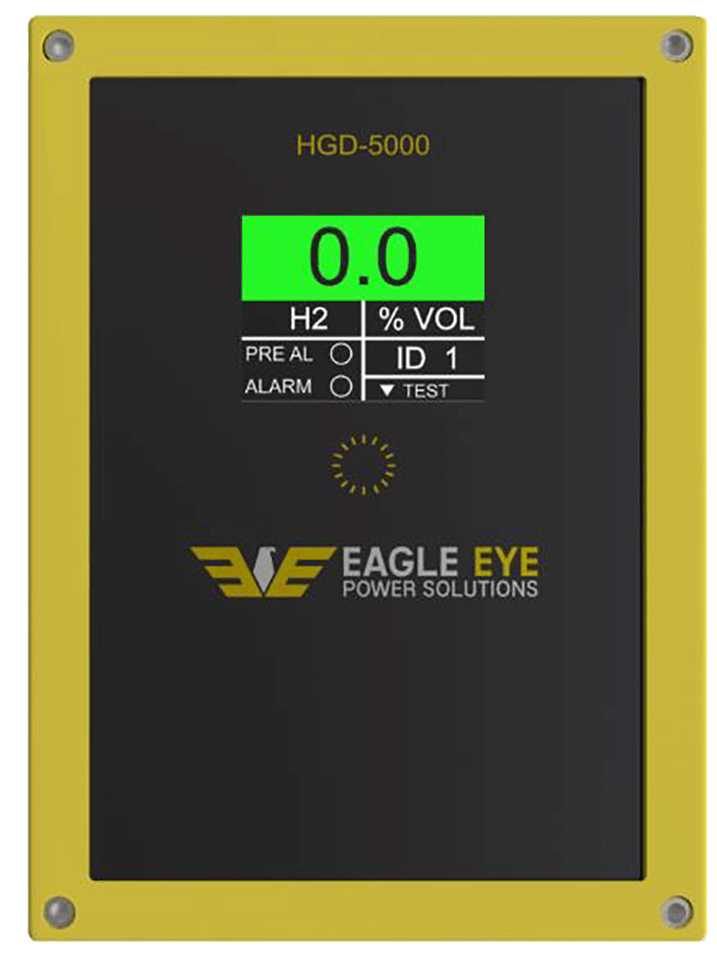
H2 Hydrogen Gas Detectors
Ensure a safe working environment from hydrogen and other combustible gas buildups that result in costly and dangerous explosions.
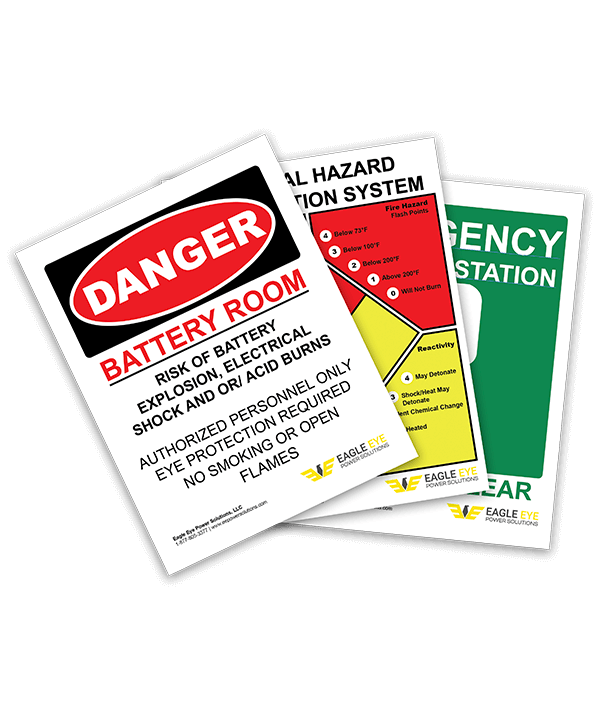
Battery Signage
Enhance battery room safety with compliant signage to prevent accidents and meet OSHA requirements with six essential safety signs.